

【Information reprint】Using microorganisms to optimize phosphorus input
Phosphorus is one of the indispensable nutrients in the growth process of plants. This article aims to answer the following important questions about phosphorus: 1. What is the role of phosphorus in plants? 2. How do plants absorb phosphorus? 3. What happens when there is a phosphorus deficiency? 4. Source of phosphorus 5. How to optimize phosphorus intake?
Phosphorus is an essential element in many mechanisms in plants, including cell division, cellular respiration, energy transfer and photosynthesis. It is involved in the composition of nucleic acids (DNA, RNA) and cell membrane phospholipids. It is the center of all bioenergetic metabolism (ATP). Although phosphorus is ubiquitous in soil, it is usually in a form that plants cannot absorb.
To meet crop requirements, phosphorus can be provided by: 1. Optimize existing phosphorus in the soil through microorganisms that can dissolve phosphorus locked in the soil. 2. Add organic matter. 3. Add mineral fertilizers.
1. The role of phosphorus in plants
Phosphorus (P) is the second element crucial to crop yield and quality after nitrogen. It is indispensable in the following aspects: photosynthesis, cell growth, plant respiration, The composition of seeds and pollen .
Phosphorus forms extremely strong bonds with other atoms. Formally through these bonds, organisms store energy in the form of ATP (adenosine triphosphate).
 The extremely strong bond between phosphorus and calcium is why our bones and teeth are strong
two, How do plants absorb phosphorus?
In order to be absorbed by plants, phosphorus must be in soluble or ionic form (HPO4- or HPO42-) exists. But this form is unstable, and phosphorus is easily attracted to cations in the soil. Unfortunately, when it combines with these cations, it becomes insoluble and no longer available to plants. The pH of the soil also plays a role in this process. In soils with an alkaline pH (pH > 6.4), phosphorus binds to calcium ions. In these soils, calcium and phosphorus are combined in the form of tricalcium phosphate, which is insoluble and therefore cannot be absorbed by plants. In more acidic soils, phosphorus combines with iron, manganese and aluminum ions. Red soil gets its color from the presence of iron oxide. Anyone who grows on these soils knows the challenges plants face with phosphorus availability. The trivalent positive charge of iron combines with phosphorus to form iron phosphate, which is both insoluble and very difficult to decompose.
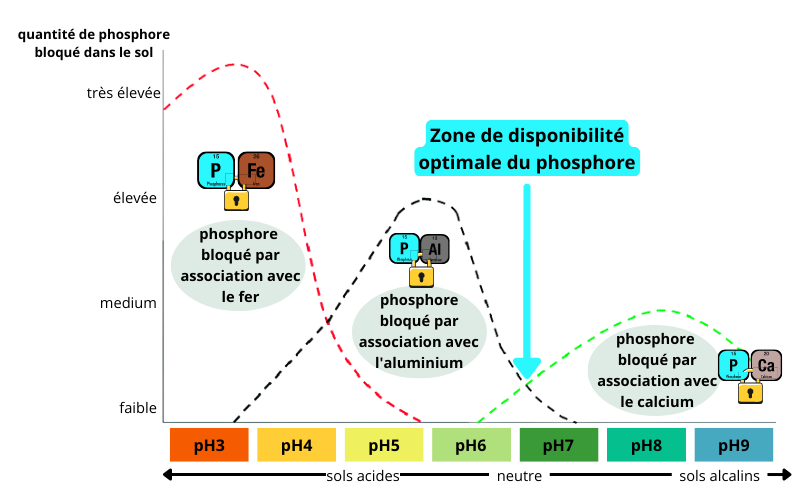 Amount of phosphorus locked in soil based on pH
However, some microorganisms are able to convert insoluble phosphorus in the soil into a plant-usable form by secreting enzymes or organic acids. In particular, certain rhizosphere bacteria and mycorrhizal fungi have such functions.
Key points: Certain microorganisms are able to convert locked phosphorus in the soil into a form that can be used by plants.
three, What happens when there is a phosphorus deficiency?
Applying phosphorus fertilizer when sowing can promote the vitality of initial plant growth and stimulate root growth, allowing the roots to search for phosphorus reserves in the soil more quickly. When phosphorus is deficient, plant growth slows or stops, possibly resulting in a 5% to 20% reduction in yield. Extreme phosphorus deficiency can cause plant death, which is why it is important to provide plants with effective phosphorus nutrition through the roots. The mobility of phosphorus in soil is limited, and even if the soil is rich in phosphorus, phosphorus deficiency may occur, mainly because: 1. Poor root development. 2. Plants are exposed to biotic or abiotic stresses that limit nutrient uptake.
When plants are deficient in phosphorus, they will gradually develop the following symptoms: 1. The leaves first turn dark green, then turn purple-red on the inside. 2. The leaves twist, curl and then wilt. 3. Plant growth slows or stops.
4. Source of phosphorus
There are two external sources of phosphorus that can meet crop needs:
The first type: Organophosphorus

The "organophosphorus" contained in organic waste (animal and plant waste) must be mineralized into phosphate ions before it can be absorbed by plants. This is what the soil microbiome is going to do. By digesting organic matter, they reorganize the phosphorus and can release it in a regular pattern when the plant needs it.
The second type: mineral phosphorus
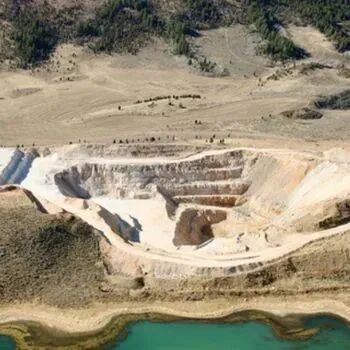
"Mineral phosphorus" is extracted by humans from mineral deposits that are organic deposits of marine or lake animal fossils. This is the basis for preparing mineral fertilizers from naturally occurring phosphorus, which is treated with acid to form the oxidized form, phosphate, which is called "absorbable" because it is water-soluble. However, these mineral resources are limited because they are not renewable on human timescales. Some predict the peak, the point at which production will stop growing, will occur between 2030 and 2040. Regardless, the price of this raw material fluctuates and sometimes soars, making its supply difficult and its use increasingly costly for farmers.
Note: The P2O5 on some fertilizer labels is a molecule that does not exist, either naturally or in fertilizers. It's really just a simple unit of measurement.
5. How to optimize phosphorus input?
Fertilizer prices are soaring and supply is difficult... Many agricultural systems still rely on phosphorus inputs, and shortages of it could affect food security. However, what we must know is that when input, phosphorus is far from fully utilized by crops. A portion of the phosphorus is usually quickly degraded and fixed in the soil. As we saw above, Phosphorus combines with mineral elements such as calcium in alkaline soils (pH above 7.0), or with iron, manganese and aluminum in acidic soils (pH below 6.4), forming a solid form that cannot be absorbed by plants. According to Australia's Commonwealth Scientific and Industrial Research Organization (CSIRO), more than 75% of soluble phosphate is lost within 6 weeks of application. We can estimate that hundreds of millions of dollars of phosphates are now trapped in agricultural soils. Therefore, when investing in soil fertilization, it's best to make sure your plants can absorb the phosphorus.
The good news is that some ways to optimize phosphorus inputs have now been found: Certain microorganisms (rhizobacteria, mycorrhizae) are the true link between soil and plants, having the ability to stimulate root density, allowing plants to absorb more of the element, while also dissolving phosphorus by breaking bonds with other atoms, making it bioavailable. The microbial agent Lalrise Start WP developed by Lallemand Plant Protection is such a product. The use of microorganisms is not intended to replace phosphorus inputs. In order to balance crop output, phosphorus inputs are still necessary. But microbial solutions can optimize resources that are already there, or maximize the use of phosphate fertilizers.
Microorganisms are therefore true allies of crops, establishing complex relationships with plants. Raman works with many universities and research institutions around the world to study the role of microorganisms, measure their agricultural value and select those that will become efficient and resilient agricultural tools.
(Original text from: Lallemand Plant Protection Technology)