
Demonstration of the results of Xuwen’s innovative technology program for early ripening and quality improvement of white sugar poppies and lychees
1. Background and needs
Zhanjiang Xuwen is located at the southernmost tip of mainland China and has natural geographical advantages for developing early-maturing subtropical fruits. In recent years, the local planting structure has gradually adjusted to subtropical fruit trees, and the lychee planting area has expanded year by year. Among them, the white sugar poppy variety has become the main recommended variety because of its early maturity, high flowering rate, and excellent quality. However, affected by tropical monsoon climate such as high temperature, rain, and fog, traditional planting methods often lead to delayed physiological maturity of lychees, unstable quality, high fruit cracking rate, and large yield fluctuations. Farmers rely on experience in applying fertilizers and pesticides without scientific guidance, further exacerbating production risks.
To this end, we have launched a set of innovative technology explorations for improving the quality of early-maturing lychees with "biological vitality cultivation + data-based control" as the core, aiming to achieve early-maturing, high-quality, and stable yields of white sugar poppy lychees through systematic and scientific management.
2. Technical goals
This project sets the following five clear goals::
1. Early maturity is 5 days earlier than in the same area ;
2. Soil organic matter content ≥30g/kg ;
3. The target yield per mu in 2025 is 2,000 kilograms ;
4. Fruit cracking rate is controlled within 10% ;
5. The sugar content of the fruit reaches above 18°.
3. Key technical solutions
Through systematic intervention in five key links, precise management of the whole process is achieved:
1. Quickly grow land : Use liquid organic nutrients (water-soluble for root nourishment) to quickly replenish soil organic matter and improve soil fertility. ;
2. Promote roots and nourish roots : Combining Wujin Green, Norwegian Seaweed, Salt Absorbing Powder and Tubekang to enhance root vitality and accumulate tree nutrients. ;
3. nutritional stress resistance : Spray Megafus, Seaweed and Tubecon during critical periods to protect white spots, relieve inhibitions and reserve energy. ;
4. Efficiently promote flowering : Stimulate flowering factors and increase the flowering rate through the use of Mejiafu and fruit moisture. ;
5. Color change and crack resistance : Supplement calcium and protective potassium to promote color change, enhance peel toughness, and reduce fruit cracking.
4. Display of digital results
1. Comparison of soil improvement effects
Table 1 Soil testing data of the same plot in July 2023 and August 2024
|
Detection indicators |
July 2023 |
August 2024 |
Improve effect |
|
Organic matter (g/kg) |
23.57 |
30.58 |
meet excellent standards |
|
pH value |
5.15 |
4.72 |
Slightly lower, need to continue to control |
|
EC value |
0.09 |
0.31 |
Nutritional release is more balanced |
|
Available calcium (mg/kg) |
66.16 |
2794.38 |
Improved by 42 times, significantly enhancing resistance to stress |
|
Effective magnesium (mg/kg) |
134.87 |
173.57 |
Steady improvement |
|
Alkaline hydrolysis nitrogen (mg/kg) |
103.46 |
140.20 |
Reasonable growth |
|
Available phosphorus (mg/kg) |
209.01 |
1008.4 |
Great release potential |
|
Available potassium (mg/kg) |
366.34 |
476.10 |
Moderate improvement |
|
Boron (mg/kg) |
1.51 |
13.47 |
significant improvement |
It can be seen that after one year of improvement, except for the slight decrease in pH value of the plot, all other core indicators have been significantly improved. Among them, the organic matter content reached 30.58g/kg, successfully achieving the initial target of "≥30g/kg" and officially entering the excellent standard range for soil organic matter. ; The effective calcium release is 42 times higher than before improvement, laying a key nutritional foundation for improving litchi stress resistance. It is worth noting that without additional application of available phosphorus and boron, the available soil content still increased significantly, which fully confirmed that the potential soil fertility was effectively activated. From the perspective of soil fertilizer supply capacity, the EC value after improvement is stable at 0.31, which is an ideal level suitable for long-term and efficient absorption of nutrients by lychees. ; The EC value before improvement was only 0.09, indicating that the soil had been in a state of "fertilizer starvation" for a long time and was unable to meet the continuous demand for nutrients for lychee growth.
2. Analysis of the relationship between leaf nutrition and fruit yield
Table 2 Nutritional testing data of leaves during the expansion period in May 2024
|
area |
Fertilizer plan |
organic matter (g/kg) |
nitrogen % |
phosphorus % |
Potassium % |
calcium (mg/kg) |
magnesium (mg/kg) |
boron (mg/kg) |
|
|
①Fruit-bearing areas (large quantity) |
Wujin Green + Root Nutrient Water Soluble + Tubeikang + Biological Calcium |
71.63 |
2.01 |
0.39 |
0.74 |
9071.35 |
3026.70 |
36.45 |
|
|
②Fruit-bearing area (medium quantity) |
Black gold green + root nourishing water soluble + Tubeikang + salt absorbing powder |
65.75 |
1.26 |
0.38 |
0.50 |
7146.66 |
3124.27 |
13.11 |
|
|
③Fruit-bearing areas (small quantity) |
Black gold green + root nourishing water soluble + Tubeikang |
62.84 |
1.32 |
0.80 |
0.49 |
6220.57 |
2816.36 |
16.95 |
|
|
④fruitless area |
Not processed |
86.63 |
1.96 |
0.32 |
0.39 |
5603.74 |
3108.77 |
47.29 |
|
From the correlation analysis data, it can be seen that among the various elements that affect the number of fruits, calcium is the core key factor.: There is a significant positive correlation between leaf calcium content and fruit-bearing amount. That is, the leaf calcium content (9071.35mg/kg) in areas with more fruit-bearing amount (such as area ① with "fruits and many") is also significantly higher than that in areas with less or no fruit-bearing amount. Based on this rule, calcium supplementation needs to be emphasized in actual production. Taking into account the poor mobility and low absorption efficiency of calcium in the tree, supplementation work needs to focus on "long-term accumulation". It cannot only be a temporary supplement during the fruit-bearing period, but should be intervened in advance from the tip stage to reserve sufficient calcium nutrients for subsequent fruit-bearing to ensure a stable increase in fruit-bearing volume.
3. Sensor-assisted control to achieve precise management
Monitor temperature changes through environmental sensors to guide the timing of control and adjustment of chemical concentration. Under warm winter conditions, appropriately increasing the concentration of paclobutrazol to 500 times, combined with potassium dihydrogen phosphate 300 times, can effectively promote the germination of white spots and avoid defoliation or shoot control failure caused by blind use of medication.
4. Lychee performs better at different stages

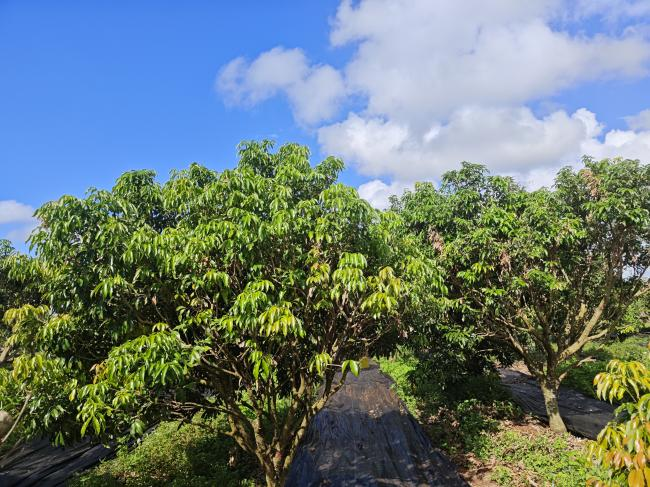
Left: Typhoon destroys one or two batches of trees Right: Quickly restore new batch of shoots 30 days after typhoon


Left: Demonstration garden white spot remains vibrant after first cold wave right: After the first cold wave, white spots in surrounding orchards became inactive.
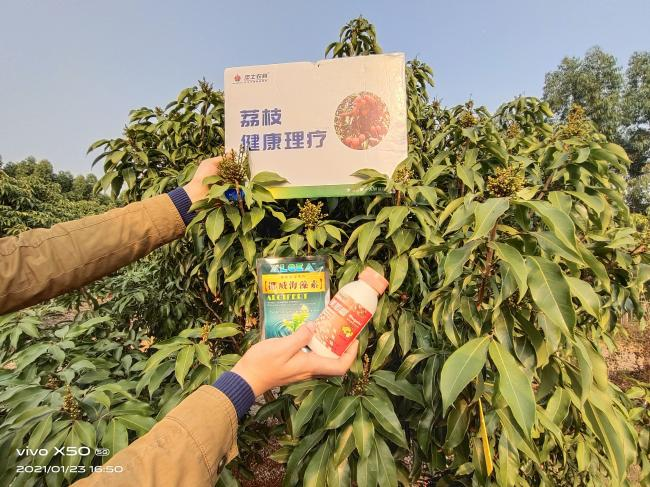
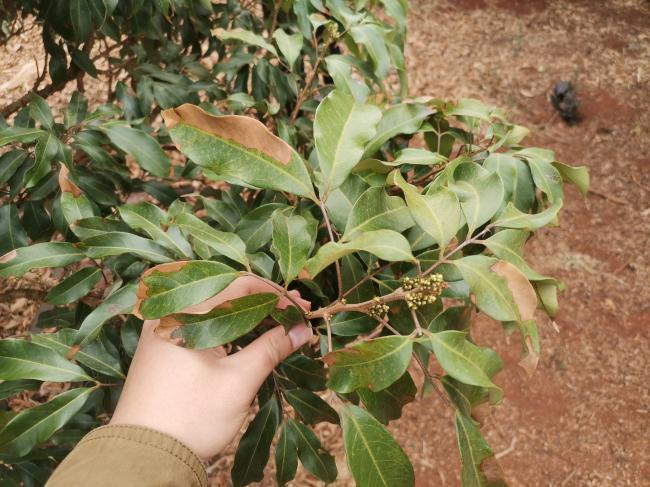
Left: The demonstration garden (January 23) has three shoots, with many flowering spots and even leaves with green leaves. ; right: In the comparison (January 25), two shoots showed fewer flowering spots and different leaf color.
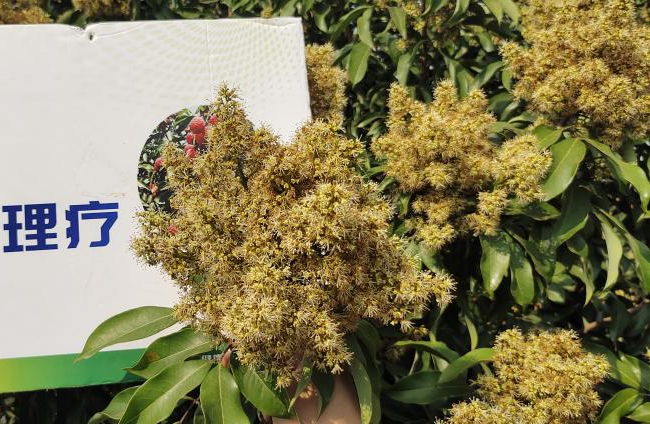
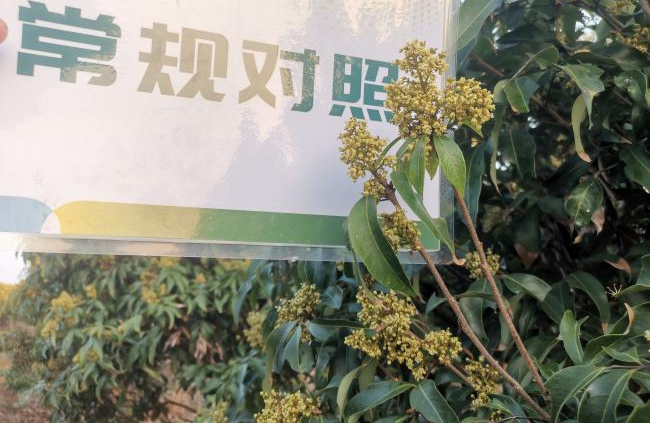
Left: The demonstration garden has a large amount of flowers during the flowering season, right: The surrounding control trees have very few flowers during the flowering period.
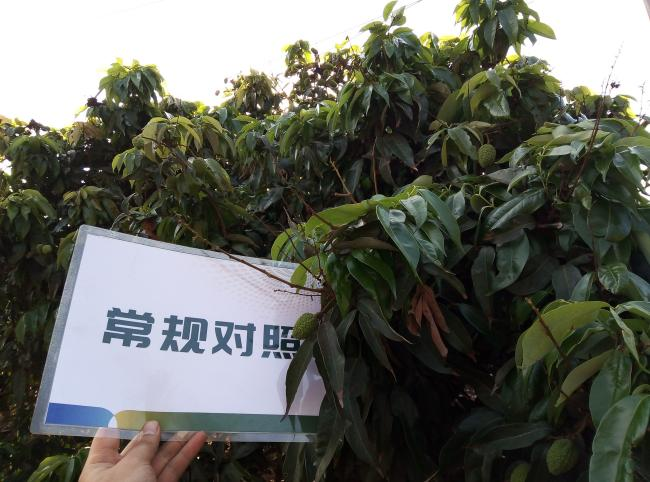
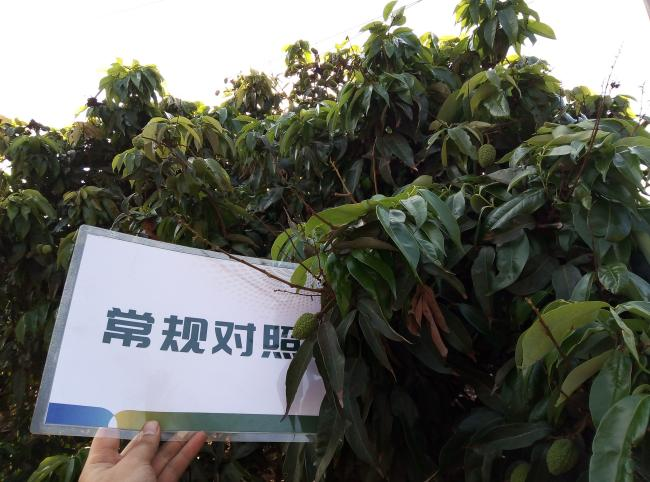
Left: The demonstration garden has too much fruit during the fruit-bearing period and the color is bright. Right: In the control fruit-bearing period, the fruit was less and the color was dim.
5. Reflection of comprehensive benefits
l Increase production and improve quality : The orchard, which originally had almost no output, has increased its yield per mu to 500 kilograms, and its sugar content has reached 19°, which is significantly higher than the local average level (16°). ;
l morning market : It went to market 7 days earlier than the control group and 3 days earlier than the earliest orchards in the surrounding area. The first batch of sales price reached 11 yuan/jin, which was 8 yuan/jin higher than the market price in the same period. ;
l Save costs and increase efficiency : In 2024, the cost of fertilizers at the tipping stage will drop from 416 yuan/mu to 265 yuan/mu, a decrease of 151 yuan/mu, and there is still room for decline. ;
l Service expansion : The cooperative retailers' service confidence has increased, and they have achieved a breakthrough in expanding their service areas to litchi. The service area has exceeded 100 acres. The number of customers has continued to grow, and they have successfully opened up a new track in the fiercely competitive market environment.
six, Summarize
This technical solution combines biological vitality cultivation with data-based control, which effectively solves many bottleneck problems in the early maturation and quality improvement of Xuwen white sugar poppy lychees, and achieves soil improvement, nutrient optimization, precise shoot control, cost saving and efficiency improvement, and has good application prospects.