
Can Crispy Honey Kumquats continue to produce high yields without digging trenches and burying fertilizers for 4 consecutive years? New technology solves recession problem, saves labor and is efficient!
Introduction: Honey kumquats are highly priced and popular, but growing them well is not easy! The soil is heavy, the root system is weak, and the tree vigor is prone to decline. The cost of digging trenches and burying fertilizers is high and will it damage the tree? The new technology "live soil to nourish roots" keeps trees strong, labor-saving and efficient!
1. The “decline curse” of crisp honey and the dilemma of digging trenches and burying fertilizer
Honey kumquats have become an upstart in the citrus market due to their high price and high demand. However, growers generally face the pain points of difficulty in preserving and expanding fruits, and rapid decline in tree vigor. It is especially difficult to achieve continuous high yields! The core reason is that:
- Born with weak roots : The root system is shallow and weak, and the ability to absorb fertilizer and water is poor.
- Poor soil: 70% of the core production areas are grown in paddy fields. Although they retain water and fertilizer, they are sticky and hardened and have poor air permeability, which can easily induce root rot.
- Management misunderstandings: Over-reliance on compound fertilizers (especially nitrogen fertilizers) and neglect of soil maintenance have aggravated soil acidification and salinization. Frequent use of conditioners to preserve fruit results in tree vigor damage.
- climate challenge: Heavy rains damage roots and high temperatures burn leaves, adding insult to injury.
traditional solution: Digging trenches and applying base fertilizer
original intention: Improve soil structure, provide long-lasting nutrients, and improve fruit quality.
Real dilemma:
- Root injury is fatal: Improper operation (such as deep trenches, near roots, etc.) can easily damage the fragile root system, leading to the invasion of pests and diseases, increasing the risk of citrus tree disease and accelerating decline.
- obesity risk: Using too much or using the wrong fertilizer (such as immature organic fertilizer, excessive chemical fertilizer, etc.) can easily cause root burn, aggravate tree weakness or even death.
- high cost: The cost of base fertilizer per plant (organic fertilizer + chemical fertilizer + artificial fertilizer) is as high as 18-22 yuan, making large-scale planting a heavy burden.
- Deteriorating soil: Digging ditches to bury a large amount of base fertilizer and the usual management habit of "flooding with water and fertilizer" aggravate soil acidification and salinization, forming a vicious cycle.
So, Can we achieve live soil, nourish roots, and strengthen trees without digging trenches, damaging roots, damaging soil, or raising costs, and achieve stable, high-quality, and sustainable production?
2. Case Witness: Lin Ge Orchard’s “No Trenching” Counterattack
Rongan Linge Orchard: 30 acres of crunchy kumquats (15 acres each planted in 2019 and 2021)
Dilemma: Burying fertilizer is time-consuming and labor-intensive (February is the busy time of garden pruning and pruning), and there is concern that root damage will aggravate decline, so we have not buried base fertilizer since 2021. However, the output value of 15 acres of trees planted in 2018 is only 130,000 in 2021, and only 170,000 in 2022. There is an urgent need to find new technologies that can increase yields and quality and maintain tree vigor without digging trenches and burying fertilizers.
choice: In 2023, it will become the first Crispy Honey Demonstration Garden of Kieshi Bio-Vitality Technology, and try a new solution of burying base fertilizer without digging trenches.
Achievements
- 2023: Successfully overcoming the problems of difficulty in preserving fruit and poor tree vigor, the output value of 15 acres of large trees increased to 640,000, an increase of nearly 4 times.
- 2024: Continuously optimizing the application plan has achieved management goals in terms of yield and tree vigor, with sustainable production and guaranteed profits.
Strong tree: The continuous high-yield trees are still strong.
soil activation: After using the vitality program, the soil became significantly looser (inserting sticks was easy and weeds were uprooted).
High fruit rate: The vitality program helps expand fruit, with 9% of No. 1 fruits and 36% of No. 2 fruits, far exceeding the surrounding orchards (generally No. 3 and 4 fruits are the main ones, and No. 2 fruits are less than 10%), which means that the average fruit unit price is higher and the output value is greater.
cost reduction: The annual root management cost per plant is only about 35.8 yuan, which is a saving of at least 14 yuan/plant compared with the traditional buried fertilizer + root water fertilizer model of more than 50 yuan, which is equivalent to a saving of more than 1,200 yuan per mu!
Output stabilizes or increases: The yield of large trees remains the same, while the yield of small trees doubles. Each large tree bears an average of 35 kilograms of fruit, with an output value of 675,000 yuan per 15 acres. ; The yield of a small tree per plant in 2023 will be about 6-7 jins, which will increase to 18-20 jins in 2024, with an output value of 375,000 per 15 acres!
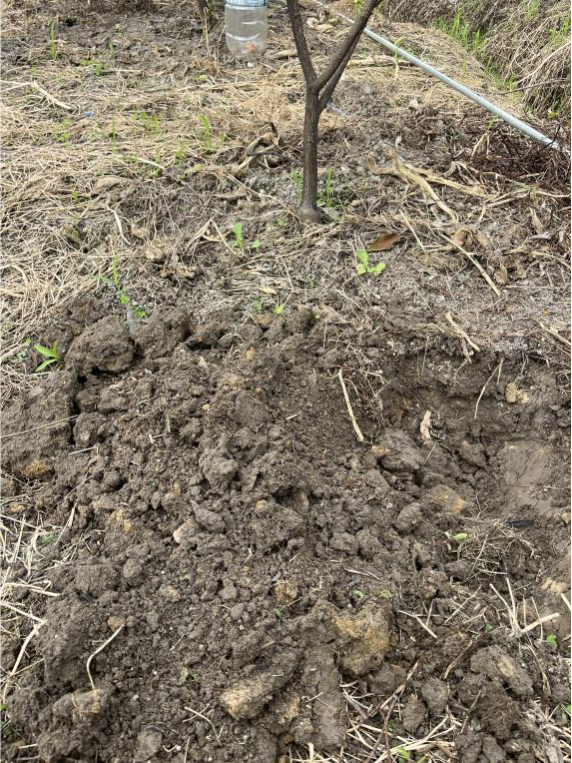
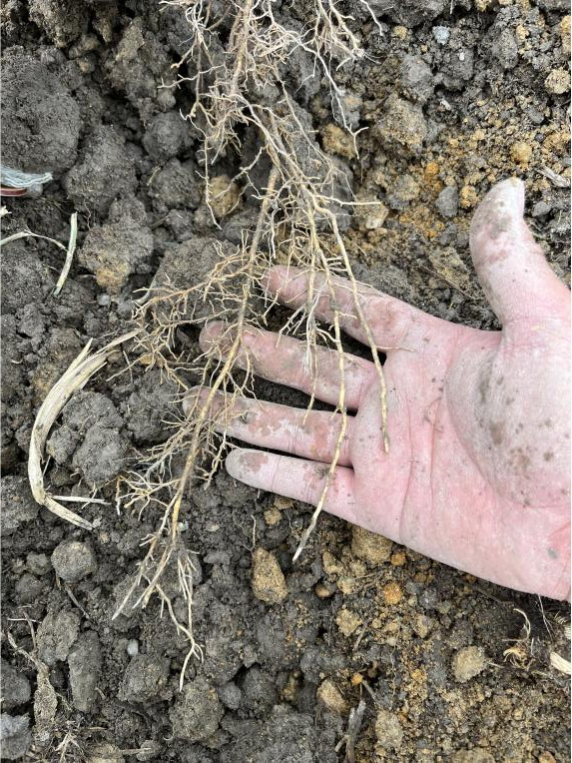
The soil in the demonstration garden is loose and the root system is strong
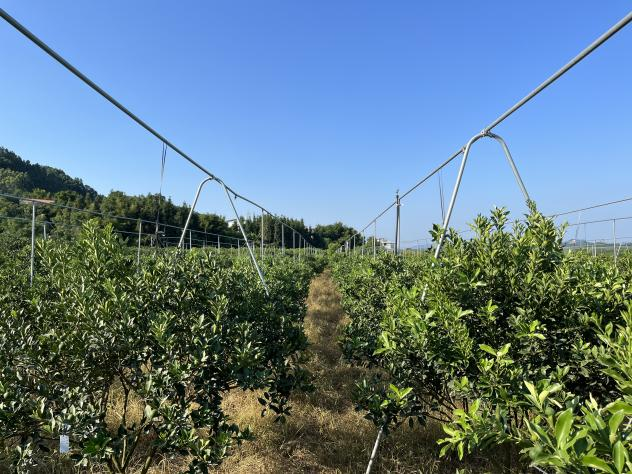
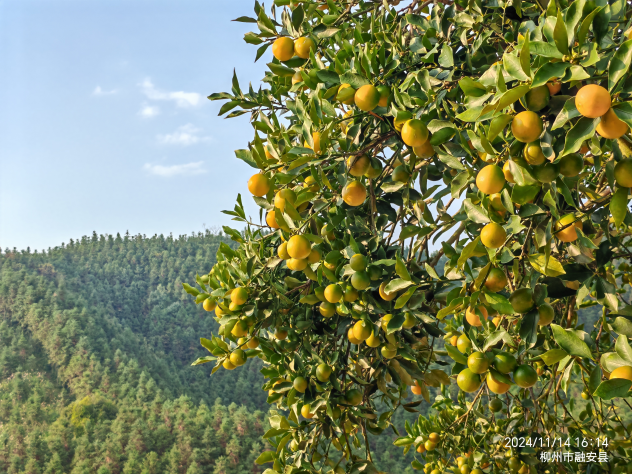
The tree has good vigor, plenty of fruit, clean fruit surface and delicate skin.
Horizontal comparison (surrounding paddy field farmers)
- A base (without burying base fertilizer, conventional plan): There will be a bumper harvest in 2021, but the trees will decline sharply in 2022. In 2023, weak trees will account for 35%, and the yield will be reduced by about 30%.
- Base B (insist on buried base fertilizer, conventional plan): The fruit bearing was acceptable in the first two years but the fruits were small. In 2023, the proportion of weak trees reached 30%, the yield was reduced by nearly 40%, and the fruits were even smaller.
- Lin Ge (Jieshi solution for non-fertilization, biological vitality technology solution): From 2023 to 2024, we will have high yields, strong trees, and large fruits for two consecutive years, becoming an outstanding representative of paddy field cultivation! An observation meeting was successfully held at the end of September 2024, attracting many growers to visit and learn.
3. Recommendation of technical solutions: Klipsch's bio-vital technology - the way to strengthen trees by "living soil and nourishing roots" without digging ditches
To address underground problems (soil compaction, root weakness, and low fertilizer efficiency), Jiashi Agricultural Science has launched a core solution based on more than ten years of verification and the demand for honey kumquats.: Use "Wujin Green + Norwegian Seaweed" to nourish roots, "Tubeikang + Root Nutrient" living soil, and "Futawang + Root Nutrient" for high-efficiency fertilizer supply, plus ecological soil protection for grass cultivation throughout the year (herbicide ≤ 2 low-concentration weeding throughout the year, and mowing the rest of the time). There is no need to dig trenches and bury the base fertilizer, and it can be integrated into conventional water and fertilizer management.
Solution core value
Save labor and convenience: Abandoning the high-cost and high-risk step of digging trenches and burying fertilizers, the plan is directly integrated into water and fertilizer management, making the operation simple and convenient.
Live soil to nourish roots:
- “Tubeikang”: Significantly improve the physical structure of the soil (promoting loosening, increasing air permeability, strong water retention) and activating beneficial microorganisms.
- “Wujin Green”+Norwegian Seaweed: Powerfully nourish and promote roots, enhance absorption and stress resistance, and solve the problem of weak roots.
Efficient fertilizer supply:
- “Let it prosper”: It greatly improves the efficiency of nutrient absorption and utilization, meeting the rapid and large nutritional needs during the critical period of fruit expansion. The fruit is uniform in size and the fruit surface is clean.
- “The roots can be nourished”: Continuously replenish tree nutrients, maintain tree vigor, and prepare for winter.
- Precise water and fertilizer: Supply on demand to avoid waste and soil burden.
Reduce costs and increase efficiency:
- Directly save labor and material costs for trenching and burying fertilizer.
- Improve fertilizer utilization and reduce total fertilizer consumption.
- Increase the commercial fruit rate (larger fruits account for more), stabilize production and even increase production.
Sustainable cultivation: This technical solution can effectively improve the soil, maintain the root system, and strengthen the tree vigor, which is a strong guarantee for achieving continuous high and stable yields of honey kumquats.
Conclusion: Save labor, increase efficiency, and achieve high yields
The bonus period for honey kumquats belongs to growers who understand technology and dare to innovate! Jiashi's biological vitality technology system, with "living soil to nourish roots and efficient co-fertilization" as its core, can scientifically solve the dilemma of declining tree vigor and digging ditches to bury fertilizers. The successful practice of Linge Orchard proves that this technology is not a simple "alternative solution", but a "systematic upgrade" from soil, root system to tree vigor and fruit, helping continuous high yields change from "difficult" to "normal".
Embrace new technologies and harvest the dividends of crunchy kumquats in an easier and more sustainable way!