
Good at cultivating the soil|Reduce cast buff: The scientific way to lose weight under the condition of soil "excess nutrition"
1. The pain of farmers: Don’t dare to lose weight
Soil testing reports show that the effective content of a large number of elements such as nitrogen, phosphorus, and potassium in many farmlands has reached "extremely high levels," and some even exceed the standard by dozens of times. In theory, this could be done with little or no fertilizer. But the reality is-farmers dare not cut back!
habitual dependence : Years of fertilization habits have formed a mindset among growers, who are worried that losing weight will bring about the risk of yield reduction. As a result, even though the soil is "excessive of nutrients", chemical fertilizers are still continuously invested, which not only increases costs but also aggravates the burden on the soil environment.
cognitive blind spots : The amount of nutrients in the soil does not equal how much the crop can absorb. The key lies in the absorption rate. In fact, the fertilizer utilization rate in my country's agricultural production is generally low, and high inventory does not necessarily mean high utilization.
So, how much room is there for weight loss? How to lose weight successfully? This requires scientific verification and feasible solutions.
2. Scientific plan: The key to losing weight is "utilization"
Theoretical calculations reveal huge space
Fertilizer application amount = (crop demand - effective soil inventory × utilization rate 1) / utilization rate 2
Take the target yield of 4,500 kilograms of cucumbers as an example (20 cm cultivation layer):
|
nutrient |
Soil inventory (kg/acre) |
Crop demand (kg) |
Inventory/demand multiple |
|
Alkaline hydrolysis of nitrogen |
16.41 |
10.35 |
≈1.6 times |
|
Available phosphorus |
74.25 |
3.82 |
≈20 times |
|
Available potassium |
41.70 |
16.88 |
≈2.5 times |
The conclusion is obvious: High nutrient soil fully meets crop needs. The core of weight loss is to improve the "utilization rate" of nutrients!
When soil nutrient stocks are extremely high (for example, available phosphorus stocks reach 20 times the crop requirement), utilization becomes the decisive variable. Three major influencing factors:
Nutrient form and activation : The test report shows "available" nutrients, but whether they can be absorbed by the roots depends on:
◦ Soil microbial activity (decomposition and transformation of nutrients)
◦ Soil pH (pH)
◦ Antagonism between nutrients (such as phosphorus and potassium fixation)
root absorptive capacity :
◦ The degree of development of the root system determines the scope of access to nutrients (for example, phosphorus can only be absorbed within 1 mm of the root surface).
◦ Symbiotic mycorrhizal fungi can greatly expand the scope of root absorption.
Fertilization method :
◦ Excessive fertilization can cause nutrients to be lost, immobilized or volatilized.
◦ Precise, small and frequent water and fertilizer management is the core.
three, science Three practical tips for losing weight in principle
Based on the principle of utilization improvement, the following effective methods have been verified in practice:
1. Activate soil microecology
• Target : Create an environment where beneficial microorganisms (such as phosphate-solubilizing bacteria and nitrogen-fixing bacteria) are active.
• measure :
◦ Add beneficial microbial preparations (such as Tubecon, Gennengyang, Yidikan).
◦ Add solid organic fertilizer or organic water-soluble fertilizer to provide microbial food.
◦ Improve the physical structure of the soil (loose and breathable, covered with straw to protect moisture and prevent hardening).
◦ Condition over-acidic soil (e.g. use salt-absorbing powder).
2. Maintain the root system throughout the process
• critical period : Transplanting stage, seedling stage (building root system), flowering and fruit setting stage (maintaining vitality).
• measure :
◦ Apply root-promoting products (such as Transplant Protect, Norwegian Seaweed, and Black Gold Green).
◦ During the seedling stage, water should be properly controlled to "squat the seedlings" to promote root penetration.
◦ Maintaining root health is the basis for efficient absorption.
3. Precise and dynamic top dressing
• in principle : “Look at the growth and test the soil, small amounts and multiple times.”
• method :
◦ Combined with soil EC value (electrical conductivity, reflecting salt/nutrient concentration) monitoring.
◦ The single dosage of water and fertilizer is extremely low (for example, no more than 1 gram of chemical fertilizer per plant).
◦ No compensation principle: Do not fertilize when growth is vigorous and there are no symptoms of nutrient deficiency.
◦ When encountering adversity (cloudy days, high and low temperatures) and insufficient photosynthesis, supplement quick-acting organic nutrients (such as Wujin Green, Root Energy Support, and Futa Wang).
4. Empirical cases: Lose weight 90 % , output increased steadily
Case 1: Greenhouse cucumbers - 90%+ weight loss, 4,500 kilograms per mu
• soil background : Clay loam soil, organic matter 1.8%, pH 4.9 (acidic), EC 0.79 ms/cm, all nutrient indicators are extremely high.
• weight loss program : With "root nourishment" as the core, only top-dressing is applied throughout the process.:
◦ Total amount of chemical fertilizers: 2.2 grams/plant (equivalent to 3.3 kg/acre).
◦ Biostimulants (Wujin Green, Futawang): Apply small amounts frequently.
◦ Straw mulching protects moisture.
• Achievements :
◦ The dosage of chemical fertilizer is only 6.6%-10% of conventional (50-100 kg/mu).
◦ The plants are strong, with thick leaves and strong continuous fruit setting ability.
◦ The average yield per plant is 3 kilograms, which is equivalent to a yield of 4,500 kilograms per mu (the local conventional yield is 3,500-5,000 kilograms per mu, which is an upper-middle level).
◦ The cost of chemical fertilizers can be saved by 80-380 yuan/mu (based on 400-500 yuan/100 kilograms of compound fertilizer), the production and income can be increased by about 1,000 yuan/mu, and the total benefit can be increased by 1,080-1,380 yuan/mu.
Case 2: Small watermelon - 85% weight loss, preservation of fertility in adverse circumstances
• plan : The dosage of macronutrient fertilizer per plant is only 5 grams (equivalent to 7.5 kg/mu), which is the conventional dosage (>50 kg/mu). &<15% , the core is root care.
• Achievements : Although the seedlings were weak in the early stage and slightly premature in the later stage (mainly due to the weak seedling foundation and insufficient root support), relying on the strong root system foundation, the lateral vines were left to produce melons in the later stage, and the melons were large and did not suffer from premature senescence. The soil EC value is stable at 0.3-0.4 ms/cm, confirming sufficient nutrients.
Case 3: Potted peanuts - 50%+ weight loss, microorganisms show their magical powers
• soil background : Perennial vegetable garden clay, very high in organic matter (4.5%), neutral pH, EC 0.78 ms/cm, very high in nitrogen, phosphorus, potassium and calcium, and very low in magnesium.
• plan : Each pot (4.5 liters of soil) only uses:
◦ 1 gram of compound fertilizer (equivalent to about 10 kg/acre).
◦ Black gold green 0.8 ml.
◦ Magnesium sulfate 0.9 g (magnesium supplement).
◦ Add phosphorus-dissolving root fungus to some pots.
• Achievements :
◦ The amount of chemical fertilizer used is less than half of that used in conventional fields.
◦ There is no fertilizer deficiency in the plants. A single plant produces 25 grams of dried kernels, and the estimated yield per mu is 250 kilograms (high yield level, better than the local norm of 200 kilograms).
◦ The yield of the phosphorus-solubilizing bacteria treatment group increased by 11% compared with the control group, proving that microorganisms can significantly improve the utilization rate of soil stored phosphorus.
◦ No overgrowth control drugs were used, and the plants did not grow excessively (the control field required two applications to control overgrowth).
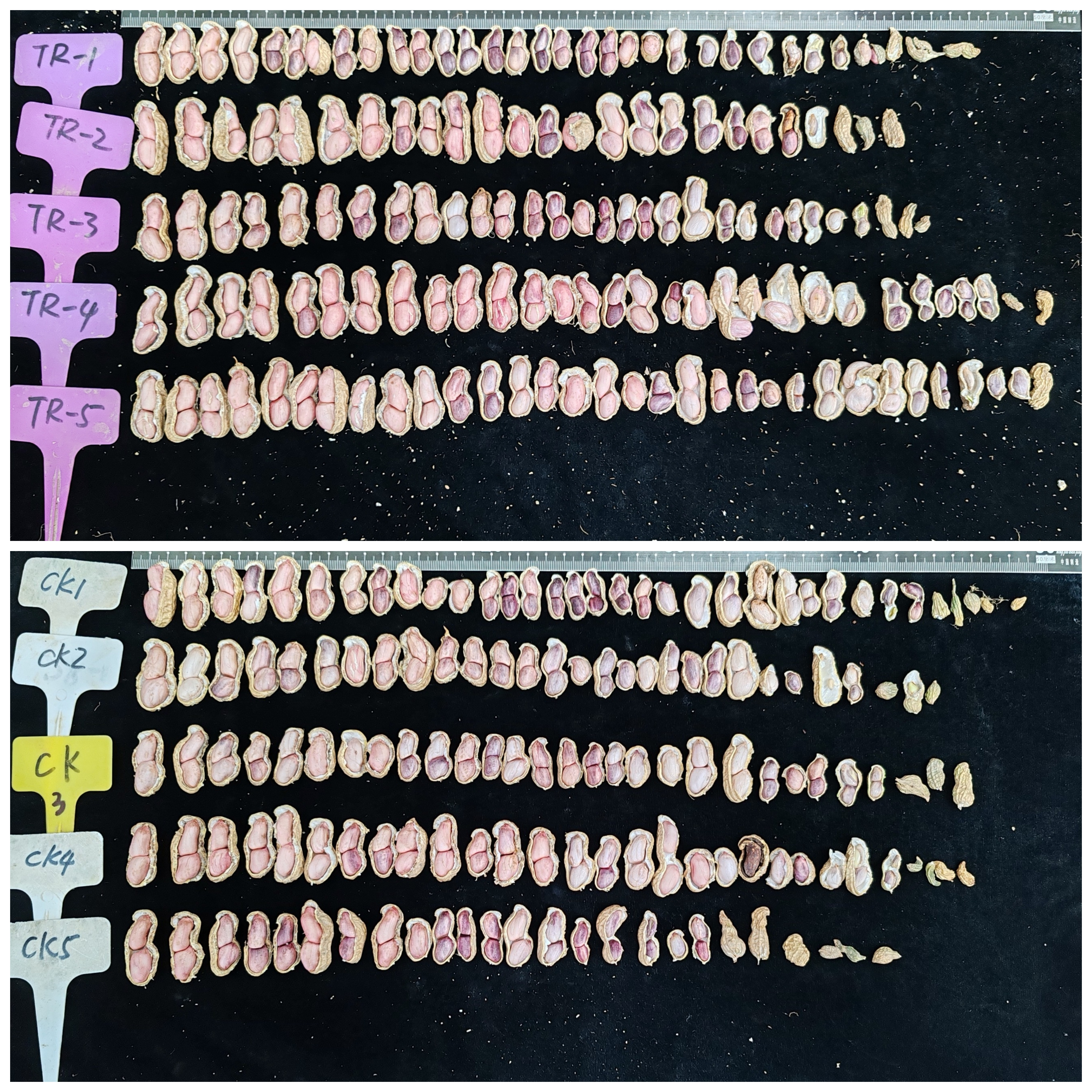
Both are potted plants, the top is treated with dissolved phosphorus, and the bottom is the control.

The upper part shows the growth condition of a field with regular fertilization, and the lower part shows the growth condition of a potted plant with less fertilizer.
Long-term practical evidence (Health Valley Greenhouse)
• Between 2016 and 2021, chemical fertilizer use continued to decline.
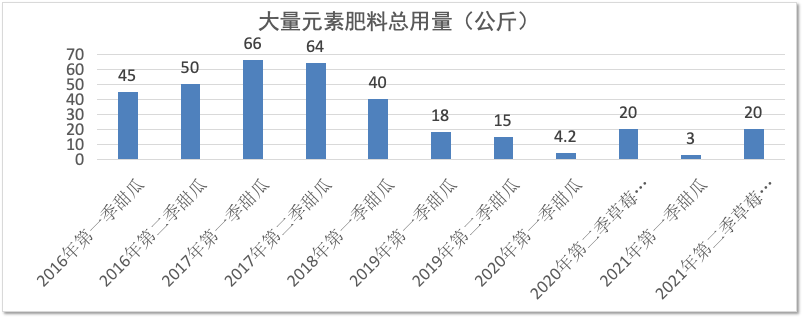
• At present, the amount of macroelement water-soluble fertilizer used for each crop of crops (melons or strawberries) is stable at &<10kg/acre .
• Soil testing indicators remain at a high level.
five, in conclusion
Farmland with "off the charts" soil testing data contains huge room for weight loss (some can reach more than 90%). The key to success is to change your thinking—— From "feeding desperately" to "smartly absorbing" . By activating soil microorganisms, strengthening crop root systems, and implementing precise dynamic management, we can not only significantly reduce fertilizer inputs and save costs, but also ensure or even improve crop yields and quality, truly achieving "fertilization reduction and gain" and sustainable development of agriculture.
Scientifically lose weight, the soil will be healthier, and the benefits will be greater!